
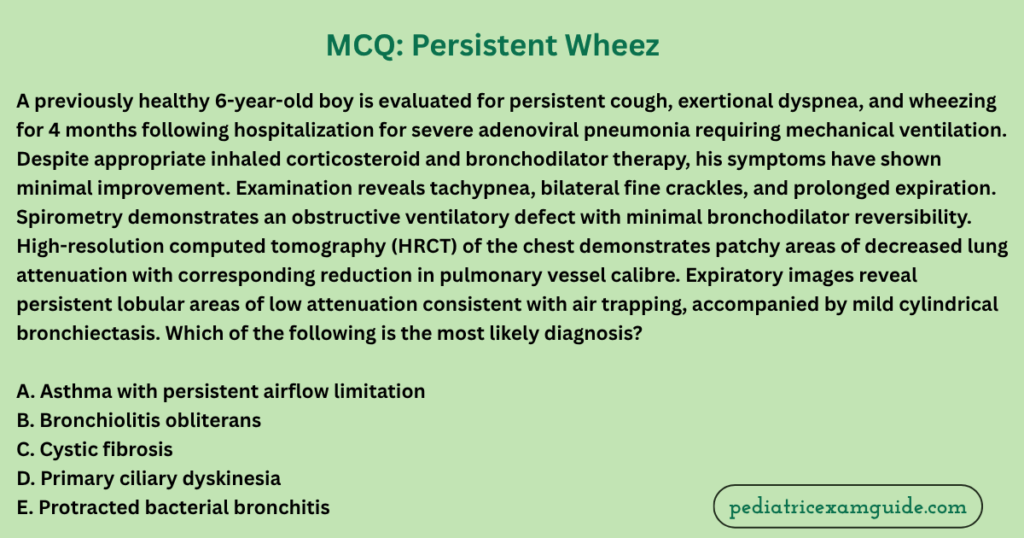
MCQ: Persistent Wheeze after Pneumonia
Clinical Scenario A previously healthy 6-year-old boy is evaluated for persistent cough, exertional dyspnea, and wheezing for 4 months following
Explore high-yield Pediatric Respiratory System MCQs designed for MBBS, FCPS, MRCPCH, and other postgraduate pediatric examinations. This section covers common and important respiratory conditions including asthma, pneumonia, bronchiolitis, pleural effusion, pneumothorax, respiratory failure, mechanical ventilation, foreign body inhalation, and other pediatric respiratory emergencies. The questions are clinically oriented and focus on diagnosis, investigations, management, complications, and key exam concepts.
Clinical Scenario A previously healthy 6-year-old boy is evaluated for persistent cough, exertional dyspnea, and wheezing for 4 months following
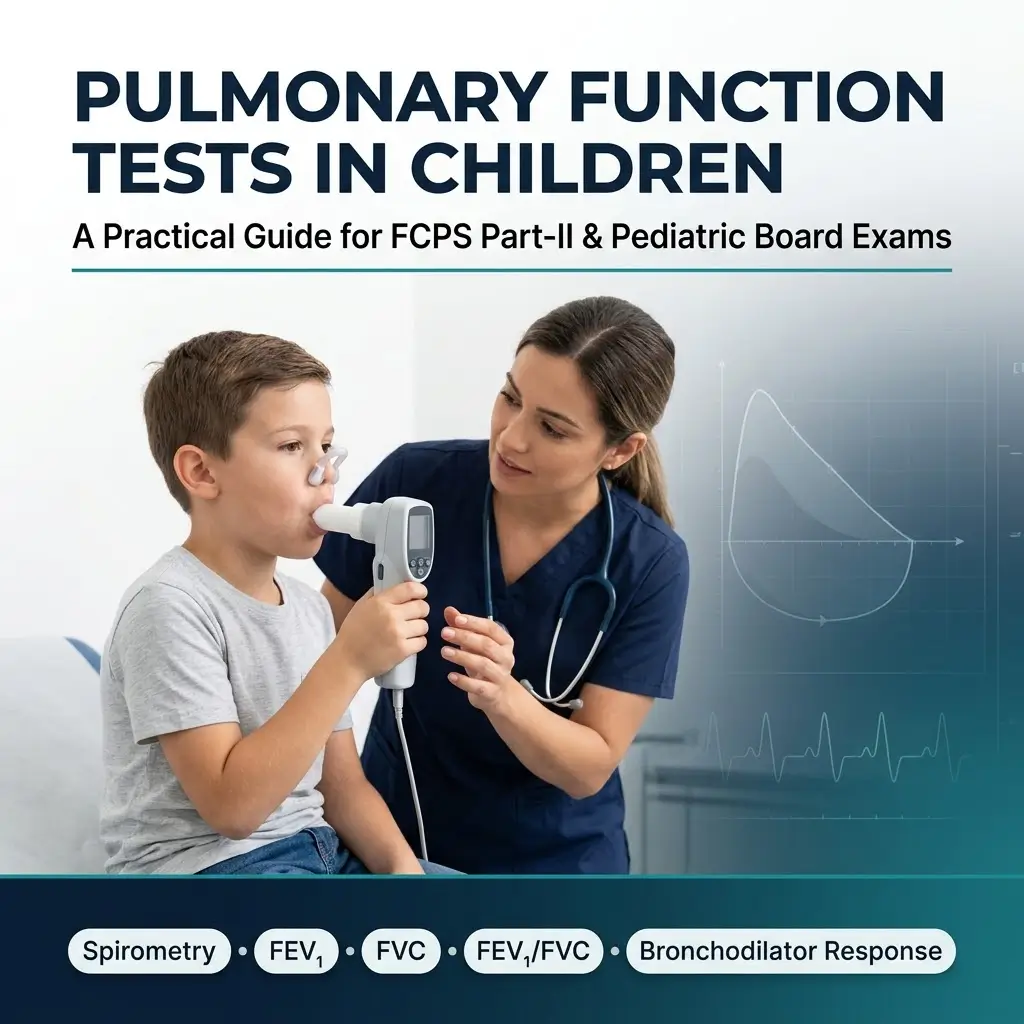
A 10-year-old boy has recurrent episodes of wheezing, cough, and chest tightness, particularly at night and after exercise. He is
Clinical Scenario: A term male newborn is delivered following prolonged perinatal asphyxia and requires resuscitation at birth. At 10 minutes,
Clinical Scenario: A 27-week preterm infant weighing 900 g develops severe respiratory distress syndrome shortly after birth. The infant receives
Clinical Scenario: A 3-year-old child with severe pneumonia develops increasing respiratory distress and hypoxemia despite oxygen therapy. He is intubated
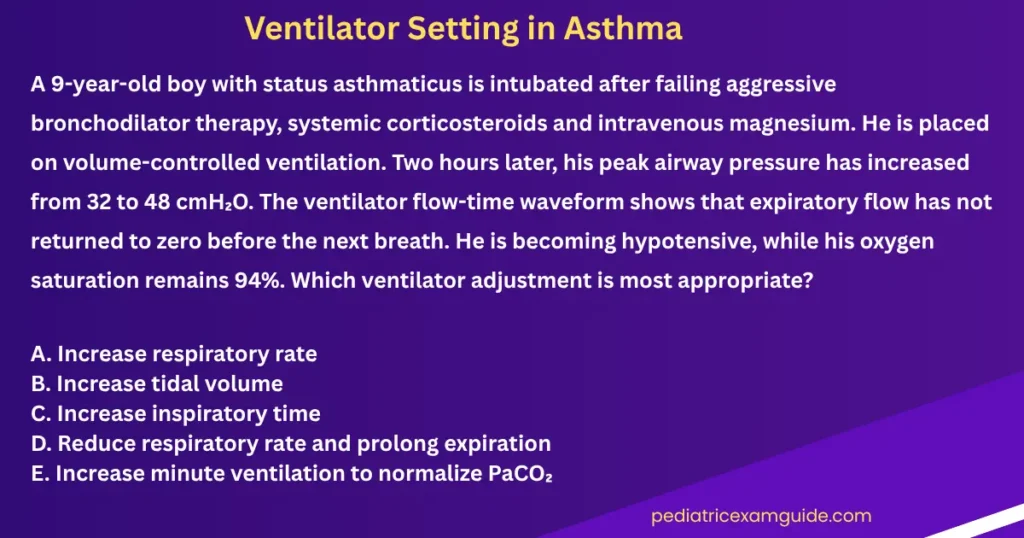
Clinical Scenario: A 9-year-old boy with status asthmaticus is intubated after failing aggressive bronchodilator therapy, systemic corticosteroids and intravenous magnesium.
Clinical Scenario: A 5-year-old child is on mechanical ventilation in the PICU for severe pneumonia. He suddenly develops worsening hypoxaemia,
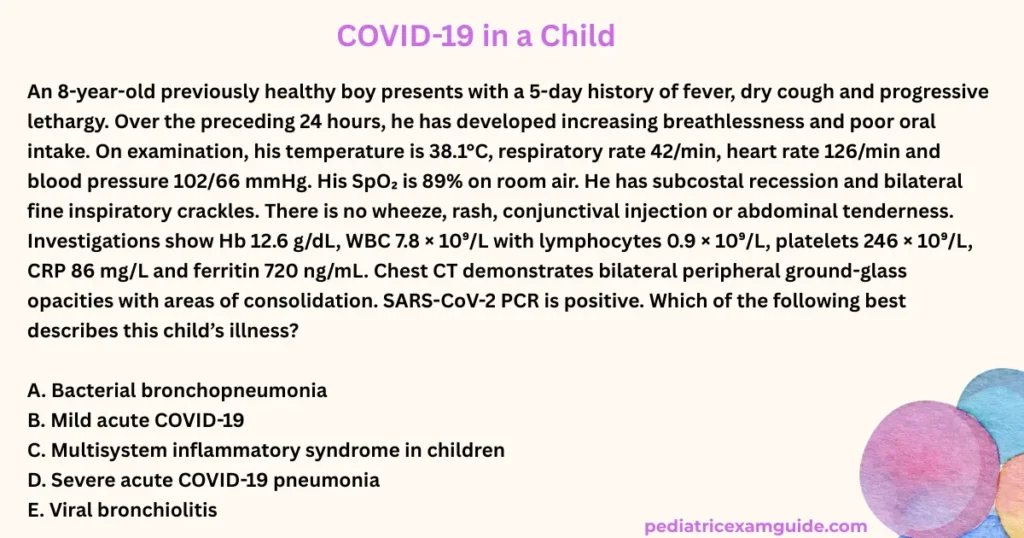
Clinical Scenario: An 8-year-old previously healthy boy presents with a 5-day history of fever, dry cough and progressive lethargy. Over
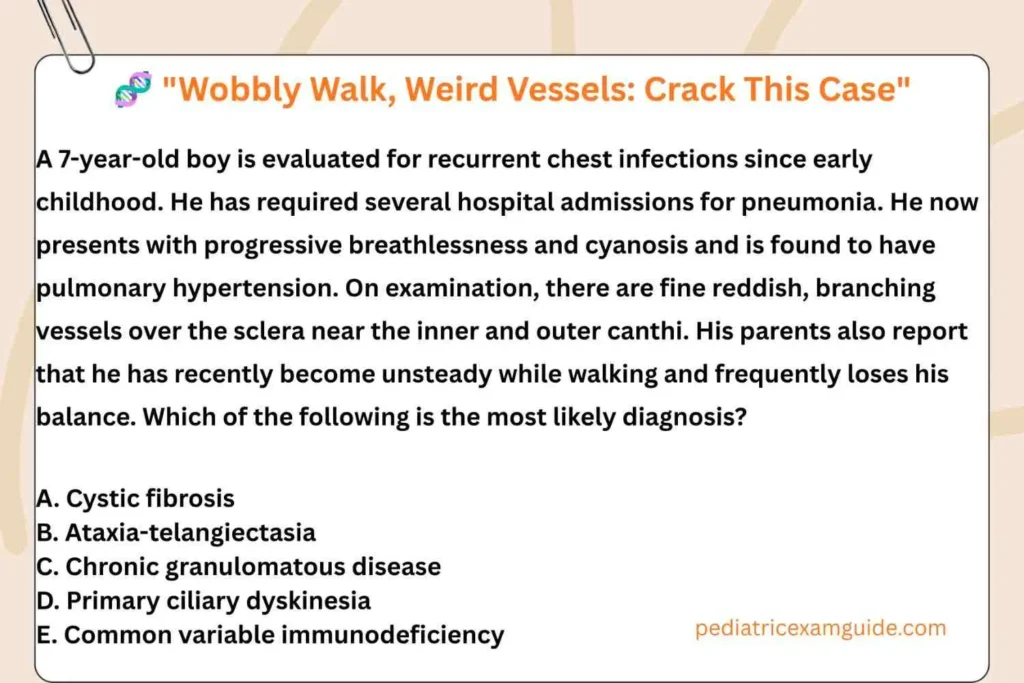
Clinical Scenario: A 7-year-old boy is evaluated for recurrent chest infections since early childhood. He has required several hospital admissions
Clinical Scenario: A 12-year-old boy with a history of poorly controlled bronchial asthma is brought to the emergency department with