
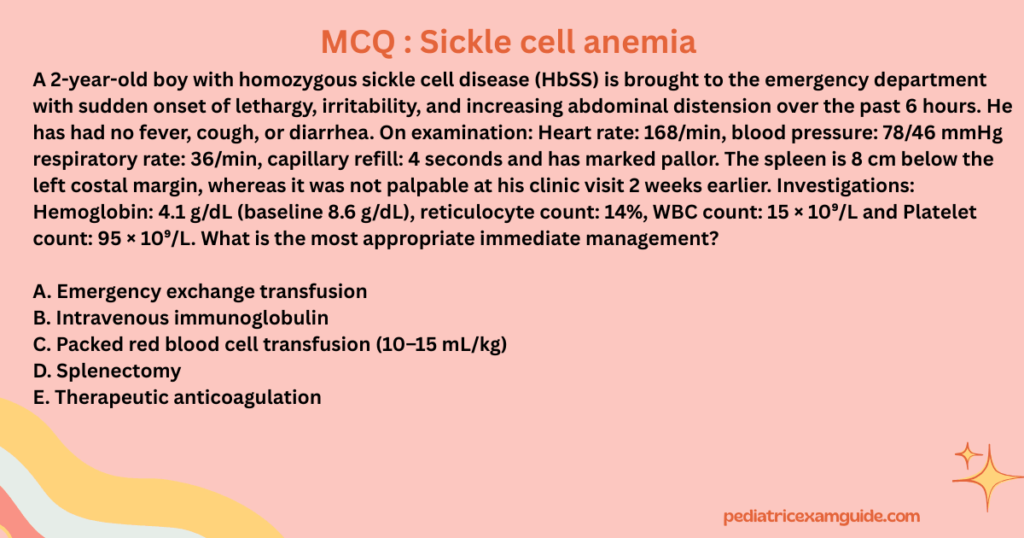
MCQ: Sickle cell disease
Clinical Scenario: A 2-year-old boy with homozygous sickle cell disease (HbSS) is brought to the emergency department with sudden onset
High-yield pediatric questions covering anemia, bleeding disorders, leukemia, lymphoma, and other important hematological and oncological conditions for MBBS, FCPS, and MRCPCH exam preparation.
Clinical Scenario: A 2-year-old boy with homozygous sickle cell disease (HbSS) is brought to the emergency department with sudden onset
Clinical Scenario: n 8-year-old boy with homozygous sickle cell disease (HbSS) presents with increasing lethargy and pallor for 2 days.
Clinical Scenario: A 9-year-old boy with homozygous sickle cell disease (HbSS) is admitted with a vaso-occlusive pain crisis. He has
Clinical scenario: Thalassemia | deferoxamine | pain abdomen | vomiting |bloody diarrhea A 10-year-old boy with transfusion-dependent β-thalassemia major is
Clinical Scenario: A 13-year-old girl is evaluated for persistent microcytic anemia. She has completed 3 months of therapeutic-dose oral iron
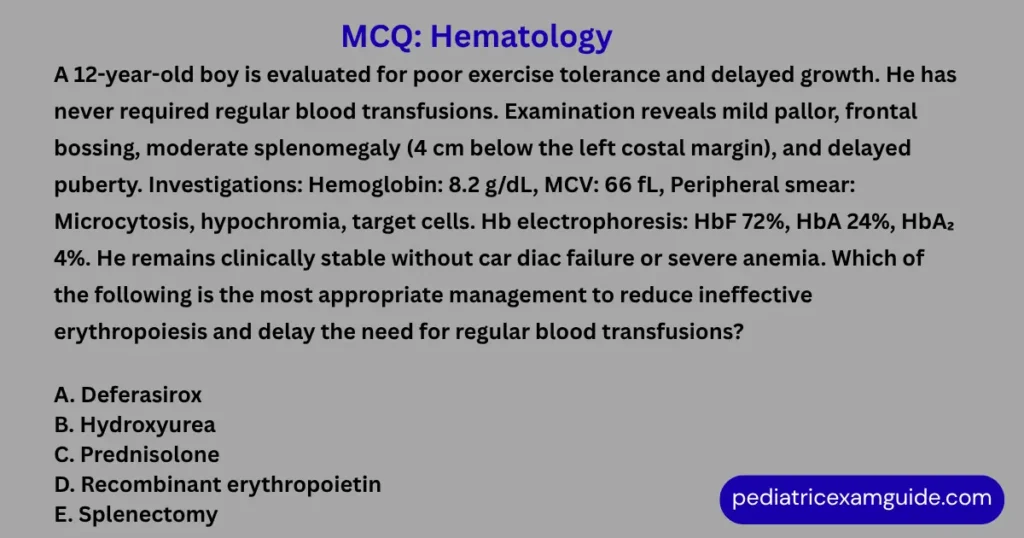
Clinical Scenario: A 12-year-old boy is evaluated for poor exercise tolerance and delayed growth. He has never required regular blood
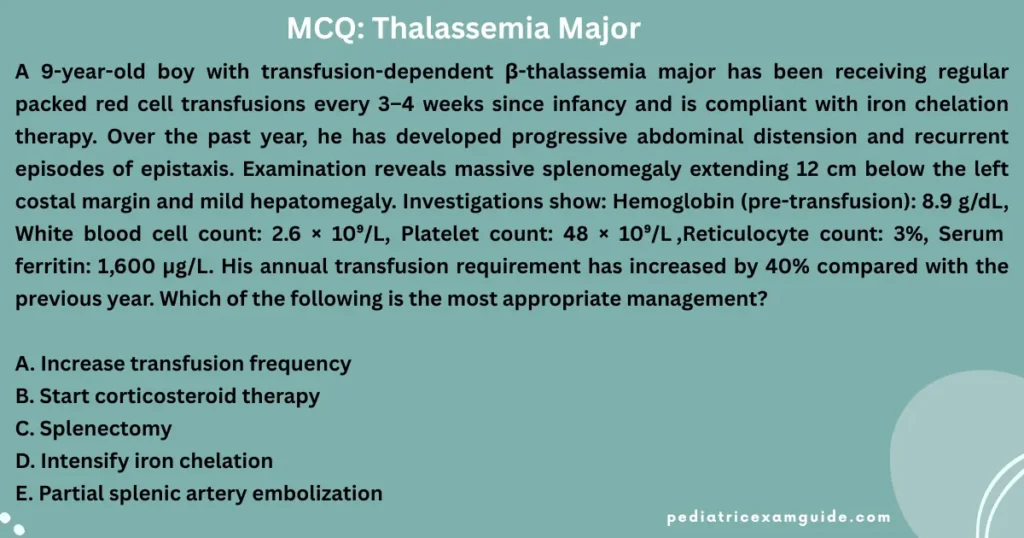
Clinical Scenario: A 9-year-old boy with transfusion-dependent β-thalassemia major has been receiving regular packed red cell transfusions every 3–4 weeks
Clinical Scenario: A 16-month-old boy is brought with progressive pallor, poor weight gain, and increasing abdominal distension. He has required
Clinical Scenario: A 7-year-old boy with transfusion-dependent β-thalassemia major has been receiving packed red cell transfusions every 3–4 weeks since
Clinical Scenario: A term male neonate develops widespread petechiae and ecchymoses within 2 hours of birth. He is otherwise well,